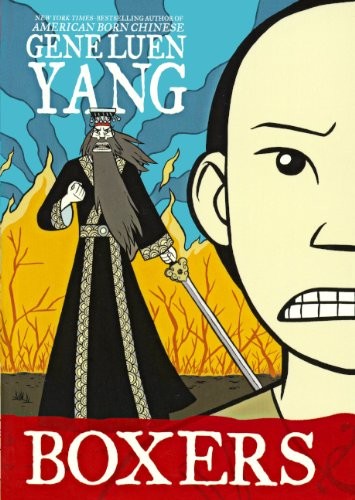
A parent would reach for this book when their teenager begins asking difficult questions about the morality of war, the weight of cultural legacy, or the thin line between being a hero and a villain. It is an essential choice for families navigating the complexities of standing up for one's beliefs in an increasingly polarized world. Set during the Boxer Rebellion in late 19th century China, the story follows Bao, a young boy who transforms into a warrior to defend his homeland against foreign missionaries and soldiers. While it is a historical graphic novel, its core is a psychological exploration of how trauma and national pride can lead to radicalization. Parents should be aware that the book contains intense violence and moral ambiguity, making it most suitable for mature middle schoolers and high school students who are ready to discuss the heavy costs of conflict.
Your experience helps other parents find the right book.
Sign in to write a reviewMany central and secondary characters, including children, die violently.
The protagonist commits war crimes; the line between hero and villain is intentionally blurred.
Depicts historical xenophobia and religious intolerance from both Chinese and Westerners.
Intense spiritual possession sequences and haunting imagery of the dead.
The book deals directly with religious conflict, colonization, and brutal warfare. The approach is both historical and magical-realist. While it honors Chinese tradition, it does not shy away from the atrocities committed by the rebels. The resolution is realistic and tragic rather than hopeful, emphasizing the cycle of violence.
A thoughtful 14-year-old who enjoys history or martial arts but is ready to move beyond 'good guys vs. bad guys' narratives. It is perfect for a student interested in how revolutions start and the psychological toll they take on leaders.
Parents should preview the scenes of village massacres and the execution of prisoners. It is helpful to provide historical context regarding the Opium Wars and the pressures facing the Qing Dynasty to help the child understand the desperation of the characters. A parent might see their child becoming overly rigid in their 'us vs. them' thinking or expressing an interest in how historical conflicts are justified.
Younger readers (12) may focus on the cool 'superpowers' and martial arts, while older readers (16+) will grasp the devastating irony of Bao becoming the very monster he sought to destroy.
Unlike many historical novels that pick a clear side, Yang uses a dual-perspective approach (complemented by the companion volume Saints) to show that everyone is the hero of their own story, even when committing terrible acts.
Set in 1894 China, Boxers follows Little Bao, a village boy who witnesses the humiliation of his father and the desecration of his culture by foreign 'devils' (Western missionaries and soldiers). Bao learns kung fu and discovers he can channel the spirits of Chinese opera gods, leading a peasant army to reclaim their land.
This overview was generated by AI based on the book's content and reviews, and may not capture every nuance.