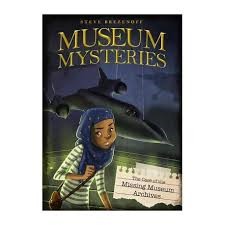
For the child who enjoys solving puzzles and exploring historical mysteries, this book offers an engaging whodunit set within the fascinating walls of a museum.
A parent might reach for this book when their curious child is ready for a 'whodunit' that is more about brainpower than scariness. This story is perfect for nurturing an interest in puzzles and history without introducing anything too intense. In "Case of the Missing Museum Archives," four friends volunteering at a local museum notice priceless artifacts are being replaced with fakes. They must combine their unique skills in history, observation, and technology to follow the clues and unmask the thief. The book champions themes of teamwork, intellectual curiosity, and the satisfaction of solving a complex problem. Ideal for readers aged 8 to 11, it's a wonderfully accessible entry into the mystery genre that feels both smart and exciting.
The book's central conflict is theft, which is handled in a very direct, secular, and clear-cut moral framework. The thief is a trusted adult, which introduces a mild theme of betrayal, but the resolution is hopeful and empowering for the young protagonists. There are no other significant sensitive topics like death, divorce, or identity struggles.
Ideal Reader
This book is perfect for an 8 to 10-year-old who is just getting into chapter books and loves puzzles, escape rooms, or shows like 'Carmen Sandiego'. The ideal reader is inquisitive, enjoys feeling smart, and wants a mystery that relies on clues and deduction rather than danger or violence.
Parent Prep
No parental preparation is necessary. The story is self-contained, and any historical concepts are explained simply within the narrative. It can be read cold without any need for pre-reading or contextualizing. A parent has noticed their child trying to solve puzzles or guess the ending of movies. The child might be getting bored with simpler stories and expresses a desire for a book that is more of a 'challenge' or a 'real mystery.'
Age Experience
A younger reader, around 8, will latch onto the adventure, the friendship dynamics, and the clear good-versus-evil plot. An older reader, 10 or 11, will likely engage more deeply with the puzzle-solving aspect, trying to decipher the clues alongside the characters and appreciating the cleverness of the mystery's construction.
What Makes It Special
Unlike many generic kid-detective series, this book's strength is its specific setting. The museum isn't just a backdrop; it's an active part of the mystery. The plot cleverly uses historical artifacts and archival processes as key clues, making history feel like an exciting, hands-on puzzle. The emphasis on collaborative problem-solving, where each child's unique skill is essential, is also a standout feature.
Read plot summary
Four friends and Junior Docents at the local history museum, Miri, Ben, Zari, and Wendell, discover that valuable historical documents and artifacts are being systematically stolen from the archives and replaced with forgeries. Each friend uses their specific talent, from historical knowledge to tech-savvy skills, to piece together clues. They follow a trail of misdated maps, strange smells, and suspicious behavior to uncover the surprising identity of the thief: a trusted museum employee.
This overview was generated by AI based on the book's content and reviews, and may not capture every nuance.
Discussion Prompts
1
Each of the four friends had a special skill that helped solve the mystery. If you were on their team, what special skill or knowledge would you bring to the investigation?
2
The thief, Mr. Graves, loved history but still chose to steal historical items. Why do you think he did that? Can someone like something but still do the wrong thing with it?
3
The kids decided to investigate on their own for a while before telling an adult. Do you think this was the right choice? When is it important to get help from a grown-up right away?
4
The mystery was solved by noticing small details, like a misdated map and a strange smell. What are some small details you notice in your own life that other people might miss?