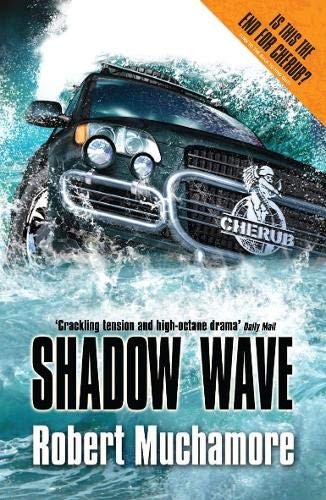
For readers craving high-stakes action and moral complexity, this thriller plunges young agents into a dangerous world fighting eco-terrorists, testing their limits.
A parent might reach for this book when their action-loving teen is ready for more complex moral questions. While a high-octane spy thriller on the surface, 'Shadow Wave' pushes readers to think critically about justice, environmentalism, and corporate greed. The story follows teenage CHERUB agent James Adams on a mission to befriend the son of a corrupt tycoon, while another agent investigates an eco-terrorist group. The book masterfully blurs the lines between right and wrong, making it a fantastic choice for a 12-16 year old who enjoys fast-paced plots but is also beginning to grapple with the gray areas of real-world issues. It's an exciting read that respects a young adult's ability to handle ethical ambiguity and can spark important conversations.
The core of the book involves questioning who is right and wrong; there are no easy answers.
Sad ThemesMild
A character is motivated by the past deaths of his family members.
LanguageMild
Contains some mild swearing consistent with the tone of the series.
Sensitive Topics
The book deals directly with the deaths of a secondary character's family, which serves as his primary motivation. This grief is handled in a secular, action-oriented way, focusing on the pursuit of justice rather than the emotional process of mourning. The resolution is realistic and morally ambiguous, not a simple, hopeful outcome. Violence is present but typical for the teen spy genre. The main sensitive topic is the intense moral ambiguity, which challenges the idea of clear-cut heroes and villains.
Ideal Reader
A teen, 13-16, who has enjoyed series like Alex Rider or Henderson's Boys but is ready for a story that doesn't provide easy answers. This reader is likely developing a stronger sense of social justice, is interested in current events like climate change and corporate ethics, and isn't afraid of an ending that feels more like the real world than a clean-cut victory.
Parent Prep
Parents should be prepared for conversations about moral relativism. The book intentionally makes the 'villainous' eco-terrorists sympathetic and the 'allied' corporation reprehensible. It can be read cold, but parents should know the CHERUB series in general features a degree of violence, mild language, and teen relationships that are treated realistically. The main preparation is to be ready to discuss the questions the book raises, rather than needing to censor any specific scene. A parent might see their teen expressing frustration or cynicism about world events, saying things like, "It feels like the big companies always win," or asking, "Is it okay to do a bad thing for a good reason?" This book meets that questioning mindset head-on.
Age Experience
A younger reader (12-13) will primarily enjoy the spy-craft, the action scenes, and the 'cool factor' of the CHERUB agents. They will recognize the moral dilemma but likely side with the protagonist's choices. An older reader (14-16) will more deeply appreciate the social commentary on environmentalism and corporate power. They will connect with the frustration and moral ambiguity, seeing the story as a reflection of complex real-world problems.
What Makes It Special
Among teen spy thrillers, 'Shadow Wave' is unique for its direct and nuanced engagement with political and ethical issues. While other series have clear antagonists, this book forces its hero (and the reader) to question who the real villain is: the activist using extreme measures for a noble cause, or the corrupt system CHERUB is forced to protect? Its willingness to be morally messy and politically relevant sets it apart.
Read plot summary
The 12th book in the CHERUB series, 'Shadow Wave' splits its focus. Veteran agent James Adams is assigned to befriend Tan Abdullah, the son of a massively wealthy and corrupt oil tycoon. The goal is to gain leverage over the father. Simultaneously, former agent Kyle Blueman, now a climate activist, investigates the radical environmental group Help Earth, which he believes was responsible for his family's deaths years ago. These two plotlines converge, forcing James to confront the moral compromises of his mission and question whether the 'bad guys' might have a just cause.
This overview was generated by AI based on the book's content and reviews, and may not capture every nuance.
Discussion Prompts
1
Helena, the leader of Help Earth, believes that radical, dangerous actions are justified to fight the greater evil of environmental destruction. Do you think her goals justify her methods? Where do you draw the line between activism and terrorism?
2
James's mission requires him to protect the family of a corrupt businessman. Did you feel conflicted about his role? Discuss the moment he has to decide whether to help Tan Abdullah.
3
At the end of the book, the corrupt tycoon Kiffer Abdullah doesn't face traditional justice for his crimes. How did this ending make you feel? Do you think it was a realistic outcome?
4
Kyle Blueman is driven by a personal need for revenge but uncovers a global problem. Do you think it's possible to separate personal feelings from the pursuit of a greater cause? Did Kyle succeed in doing so?