About This Book
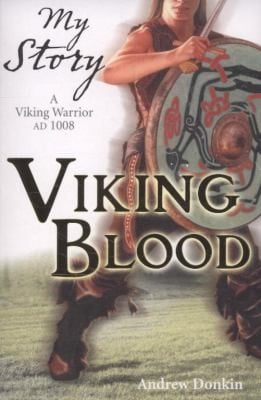
Tor Scaldbane is devastated at losing his chance to be legendary warrior. However he discovers the sagas of his ancestors and realizes all might not be lost after all ...
peril_danger
Violence
Wonderlit Review
Andrew Donkin's "Viking Blood" introduces readers to Tor Scaldbane, a young Viking boy whose aspirations of becoming a legendary warrior are dashed, leaving him devastated. The narrative skillfully pivots from this initial disappointment to Tor's journey of self-discovery, as he immerses himself in the sagas of his ancestors. This exploration of heritage and ancient tales helps Tor redefine what it means to be a hero, realizing that strength and legend can manifest in ways beyond traditional combat.
The book handles the sensitive topic of disappointment and perceived failure with a hopeful and empowering arc. It begins with a heavy heart but transitions into a journey of curiosity, introspection, and ultimately, triumph. This makes it an excellent choice for children who might be grappling with feelings of inadequacy, struggling to find their place, or feeling like they've fallen short of expectations. Parents might reach for this book when their child is experiencing a setback, showing an interest in historical cultures, or needs a story that champions resilience and alternative forms of success.
For younger readers (8-9), the historical setting and the adventure of discovering ancient sagas will be the primary draw. Older readers (10-11) will likely connect more deeply with Tor's internal struggle and the nuanced themes of identity, heritage, and redefining personal greatness. Parents should be prepared to discuss the various forms of heroism and how Tor's journey challenges conventional notions of a 'warrior.' While the Viking setting implies some peril, it is presented in a manner suitable for juvenile fiction, focusing on character development rather than graphic conflict. This book stands out by emphasizing ancestral wisdom and personal growth as central to heroism, offering a refreshing perspective on Viking tales.
More in My Story
If Your Family Enjoyed This
Reviews
No reviews yet. Be the first to share how this book landed with your family.