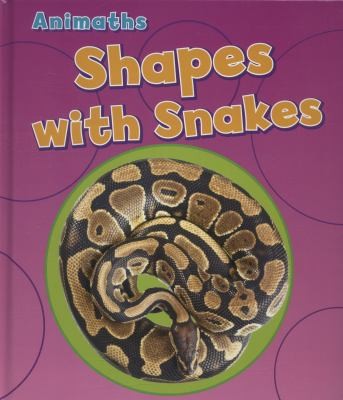
A parent might reach for this book when their child shows a budding interest in animals, especially reptiles, and they want to channel that curiosity into learning foundational concepts like shapes. Instead of using typical illustrations of blocks or toys, 'Shapes with Snakes' brilliantly uses captivating, full-color photographs of real snakes to demonstrate circles, ovals, triangles, and more. This approach makes abstract geometric ideas tangible and exciting. The book fosters a sense of wonder and joy in discovering patterns within the natural world, making it a perfect choice for young, nature-loving learners who may be resistant to more traditional educational books. It’s an excellent way to connect math to the world around us.
None. The book is a straightforward educational tool. However, some children have a strong fear of snakes (ophidiophobia), and the close-up, realistic photographs could be frightening to them. The snakes are presented in a neutral, scientific context, not as threatening.
A 5- to 7-year-old who loves animals and nature but finds standard, cartoon-style concept books unengaging. It's perfect for a visual or kinesthetic learner who benefits from seeing real-world examples and might be inspired to mimic the shapes. It will strongly appeal to children with an early interest in biology or zoology.
Your experience helps other parents find the right book.
Sign in to write a reviewFor a child with a known fear of snakes, a parent should preview the photographs to gauge their potential reaction. Otherwise, the book can be read cold. The simple text and clear concept require no special preparation. Parents can extend the learning by using the glossary in the back. A parent notices their preschooler or kindergartener is bored by shape flashcards or is struggling to connect the abstract idea of a shape to the world around them. Or, a child expresses a specific fascination with snakes, and the parent wants to leverage that interest for educational purposes.
A younger child (5) will likely focus on identifying the primary shapes and enjoy the simple matching game of seeing the snake form the shape. An older child (7-8) may become more interested in the different types of snakes, their scale patterns, and the science of how they move. They will be more capable of applying the concept by looking for shapes in other animals and environments.
Unlike the vast majority of shape books which use illustrations or inanimate objects, this book’s unique hook is its exclusive use of high-quality photographs of snakes. This grounding of a mathematical concept in biology makes it a standout. It successfully bridges the gap between a math primer and a nonfiction nature book, appealing to a specific subset of young learners.
This is a nonfiction concept book for early learners. Each two-page spread introduces a basic geometric shape (circle, oval, triangle, rectangle, etc.) on one page and features a large, high-quality photograph of a snake contorting its body into that shape on the opposite page. The text is minimal and direct, identifying the shape and sometimes the type of snake. The book effectively pairs a core math concept with high-interest nature photography to create an engaging learning experience.
This overview was generated by AI based on the book's content and reviews, and may not capture every nuance.