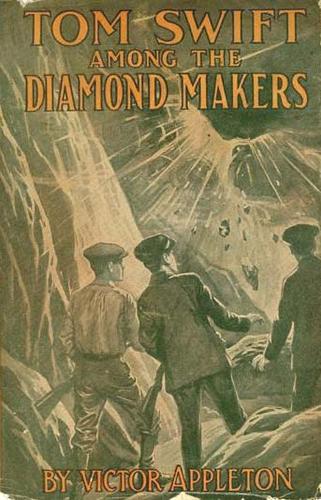
A parent might reach for this book when their child, fascinated by how things work, yearns for a classic adventure that celebrates ingenuity and a can-do spirit. In this early 20th-century science fiction tale, young inventor Tom Swift embarks on a daring mission to a remote volcanic island to create artificial diamonds. He must use his scientific brilliance to overcome natural obstacles and outsmart unscrupulous rivals who want to steal his secrets. The story champions themes of curiosity, perseverance, and creativity, all within a straightforward good-versus-evil framework. While the inventive spirit is timeless, parents should be aware that the book's language and social attitudes, particularly its racial stereotypes, are dated and require discussion.
Reflects early 1900s social attitudes, language, and norms that are outdated and may be offensive.
Mild PerilMild
Characters face danger from storms, machine malfunctions, and scheming rivals.
ViolenceMild
Contains some non-graphic fistfights and threats between characters.
Sensitive Topics
The book contains significant, dated, and offensive racial stereotypes. The approach is a reflection of its 1911 publication date. The primary example is the African American character, Eradicate "Rad" Sampson, who is portrayed as a comic relief figure speaking in a heavy, caricatured dialect. This requires direct, secular discussion about historical context and why such portrayals are harmful. The resolution to the main plot is unambiguously hopeful for the protagonist.
Ideal Reader
The ideal reader is a 10 to 13-year-old who loves building things, is interested in mechanics and engineering, and enjoys straightforward adventure stories. They are likely a fan of classic tales of exploration and invention and are not deterred by older prose. This child appreciates seeing a clear problem and a clever, science-based solution.
Parent Prep
Parents absolutely must prepare to discuss the racial stereotypes in the book, particularly the character of Eradicate Sampson. It cannot be read cold without addressing this. Parents should frame it as a learning opportunity: to discuss how depictions of people have changed, why the stereotypes in the book are offensive, and the importance of respectful representation in media. A parent sees their child engrossed in building complex LEGO models, programming simple games, or asking detailed questions about how cars or computers work. The child expresses a desire for stories about kids who invent amazing things and go on grand adventures.
Age Experience
A younger reader (9-10) will likely focus on the exciting plot: the airship, the secret lab, and the battles with the villains. An older reader (11-13) may be more engaged by the pseudo-scientific explanations and the process of invention. The older reader is also better equipped to participate in a nuanced discussion about the book's dated social and racial content.
What Makes It Special
Unlike modern STEM fiction that often focuses on coding, robotics, and social complexity, this book is a pure artifact of the early 20th-century's romance with electricity and mechanics. Its uniqueness lies in its historical value, showcasing a boundless optimism in technological progress. It is a foundational text for juvenile science fiction, offering a direct, uncomplicated fantasy of inventive genius.
Read plot summary
Brilliant young inventor Tom Swift constructs an experimental laboratory on a remote volcanic island with the goal of manufacturing artificial diamonds using immense electrical power. He and his companions must contend with a rival syndicate that lands on the same island, attempting to sabotage his work and steal his groundbreaking process. The plot follows Tom's clever problem-solving, his struggles to perfect his machinery, and his eventual confrontation with and triumph over the story's villains.
This overview was generated by AI based on the book's content and reviews, and may not capture every nuance.
Discussion Prompts
1
Tom's rivals try to steal his invention instead of creating their own. Why do you think they chose this path, and what does it say about their character versus Tom's?
2
The character Eradicate Sampson is written using stereotypes that are considered offensive today. Why is it important for us to notice and discuss this when we read older books?
3
Tom faces many technical problems and setbacks on Crater Island. Can you think of a specific example where he used his scientific knowledge to solve a problem in a clever way?
4
Tom brings several friends with him to help on the island. How did teamwork contribute to the success of his diamond-making experiment?