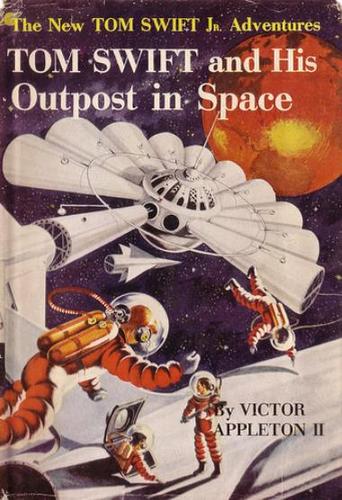
A parent might reach for this book when their child is captivated by invention, engineering, and action-packed problem-solving. This story is for the kid who loves to know how things work and dreams of creating their own amazing gadgets. In 'Tom Swift and the Electronic Hydrolung', the brilliant young inventor Tom creates a revolutionary device for breathing underwater. His plans for peaceful deep sea exploration are quickly threatened by shadowy spies determined to steal his technology for their own purposes. The book champions curiosity, resilience in the face of failure, and the power of teamwork. It is a classic, fast-paced adventure ideal for middle-grade readers who enjoy science-fiction that is optimistic, exciting, and focused on ingenuity.
Your experience helps other parents find the right book.
Sign in to write a reviewIncludes some fistfights and use of non-lethal gadgets against villains. Not graphic.
Features stereotypical, one-dimensional foreign villains reflective of Cold War-era xenophobia.
The primary sensitive element is the book's Cold War context. The villains are one-dimensional, stereotyped foreign spies (Brungarians) portrayed as inherently malicious. This is handled in a direct, nationalistic, and secular way. The resolution is an unambiguous and triumphant victory for the American hero, reflecting the era's jingoistic optimism.
This book is perfect for a 10 to 13-year-old who is a tinkerer or maker at heart. They are fascinated by mechanics, engineering, and technology, and prefer plot-driven stories with lots of action and cool gadgets. This reader is looking for inspiration and escapism, not deep character studies or complex moral dilemmas. They likely enjoy shows about science and building.
Parents should preview the book to understand its 1960s cultural context. A brief conversation about the Cold War and how it influenced stories from that time could be beneficial. It helps frame the simplistic 'good guys vs. bad guys' narrative and the stereotypical portrayal of foreign antagonists. The science is also highly speculative and should be presented as imaginative fun, not a textbook. A parent has a child who expresses a love for STEM subjects but finds their assigned school reading boring. The child says they want "adventure books with science and machines, not just feelings." The parent is looking for a book to bridge the gap between their child's technical interests and reading for pleasure.
A 9-year-old will be swept up in the adventure, the amazing hydrolung, and the clear-cut battle against the spies. They will experience it as a pure action story. A 13-year-old will still enjoy the action but may also appreciate the pseudo-technical explanations of the gadgets. They may also be more likely to recognize the dated social and political attitudes with a more critical eye.
In a modern landscape of dystopian and morally complex YA science fiction, this book is a prime example of mid-century American technological optimism. Its defining feature is the unwavering belief that ingenuity, science, and a can-do attitude can solve any problem. It is a celebration of invention for its own sake, wrapped in a straightforward adventure package.
Young genius Tom Swift Jr. invents the electronic hydrolung, a device that extracts oxygen directly from water, allowing for unlimited underwater exploration. He and his friends plan to use it for oceanographic research and to salvage a sunken uranium freighter. Their project is targeted by agents from the fictional rival nation of Brungaria, who repeatedly attempt to sabotage the mission and steal the device. The story follows Tom as he uses his scientific prowess and an array of other inventions to outsmart the spies in a series of underwater chases and technical challenges.
This overview was generated by AI based on the book's content and reviews, and may not capture every nuance.