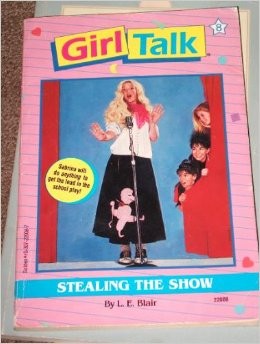
For the young reader navigating the intense world of social dynamics and peer scrutiny, this story explores the pressures of reputation, identity, and balancing outward poise with inner feelings.
A parent might reach for this book when their teen is navigating the intense pressures of high school social hierarchies, online reputation, and the feeling that they must project a perfect image. Stealing The Show follows a classic 'queen bee' character whose meticulously crafted social standing is threatened by a mysterious, all-seeing gossip blogger. The story delves into the anxiety of public scrutiny, the complexities of 'frenemies,' and the struggle to align one's public persona with private feelings. Appropriate for older teens, this book serves as a vehicle to discuss peer pressure, jealousy, and the search for authentic self-confidence in a world that often values appearance over substance.
Explores feelings of anxiety, loneliness, and betrayal from friends.
Substance ReferencesMild
May contain non-graphic references to underage drinking at parties.
Sensitive Topics
The book's primary sensitive area is its direct and often sharp portrayal of psychological and social cruelty among teenagers: bullying, exclusion, rumor-mongering, and manipulation are central to the plot. The approach is secular and realistic, though heightened for dramatic effect. The resolution is hopeful in terms of character growth; Blair learns to be more authentic and resilient, but the cutthroat social environment itself is not magically fixed.
Ideal Reader
The ideal reader is a teen, aged 13-16, who is fascinated by high-drama social dynamics and character-driven stories. It is particularly resonant for a teen who feels the pressure to be perfect, is dealing with complex friendships that border on rivalry, or is navigating the anxieties of an online social life where reputation is everything.
Parent Prep
Parents should be prepared for themes of social backstabbing, romantic drama, and moral ambiguity where 'good' characters do bad things. The book will likely contain references to wealth, designer brands, and potentially underage drinking at parties. It can be read cold, but it offers a great opportunity to discuss the difference between online personas and real life. A parent has just heard their teen express intense anxiety about what others think of them, saying something like, "If people knew what I was really like, they wouldn't like me," or, "I feel like I'm in a competition with my own friends."
Age Experience
A younger teen (12-13) will likely be drawn in by the glamour, mystery, and fast-paced drama of the plot. An older teen (14-16) is more likely to appreciate the psychological depth, the satirical commentary on social structures, and the nuanced exploration of Blair's internal conflict between her ambition and her vulnerability.
What Makes It Special
Unlike many teen dramas that simply present a cruel queen bee, this book's uniqueness lies in its witty, almost comical portrayal of the protagonist's overachieving and obsessive nature. The humor makes her vulnerabilities more accessible and provides a sharp critique of the absurdity of social climbing, setting it apart from more straightforwardly earnest or grim stories on the same topic.
Read plot summary
The story centers on Blair, a wealthy and ambitious high school student who reigns as the undisputed queen bee of her elite Manhattan private school. Her power is maintained through careful planning, social maneuvering, and a flawless public image. This control is shattered by the emergence of an anonymous gossip blogger who begins publishing embarrassing secrets about Blair and her inner circle, causing alliances to crumble and paranoia to mount. The plot follows Blair's increasingly desperate attempts to unmask the blogger while grappling with betrayals, romantic entanglements, and the realization that her perfect facade is both a prison and a target.
This overview was generated by AI based on the book's content and reviews, and may not capture every nuance.
Discussion Prompts
1
Blair puts enormous effort into maintaining her 'queen bee' status. Do you think the power and popularity she has is worth the constant stress and work? Why or why not?
2
The gossip blogger exposes secrets to the whole school. Do you see their actions as a form of justice against the popular kids, or just another form of bullying?
3
Blair's relationship with her best friend is full of both loyalty and intense competition. Can someone be both your closest friend and your biggest rival at the same time?
4
How does the person Blair pretends to be in public differ from the person she is when she's alone? Why do you think it's so important for her to project a perfect image?