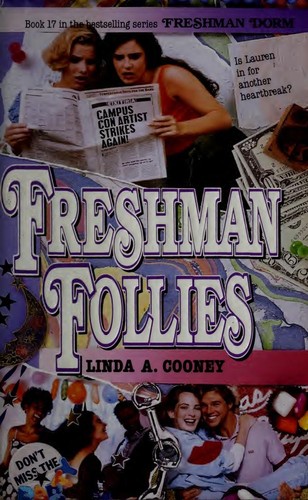
For teens entering high school, this story captures the roller coaster of making new friends, fitting in, and finding your place amidst crushes and social schemes.
A parent might reach for this book when their teen is facing the overwhelming anxiety of starting high school and trying to navigate a new, complex social world. "Freshman Schemes" follows Kate, who feels invisible in the sprawling halls of her new high school and desperately wants to fit in with the popular 'In Crowd.' The story explores the lengths she goes to for acceptance, including participating in a deceptive plan that tests her friendships and her own integrity. It's a gentle, relatable dive into themes of loneliness, the desire to belong, peer pressure, and the importance of being true to oneself. For teens aged 13 to 16, this book from the 90s provides a timeless, pre-social media look at the universal rollercoaster of freshman year, making it a great tool to spark conversations about making good choices and finding genuine friends.
Protagonist lies and manipulates others to gain popularity, but ultimately learns her lesson.
Cultural Content GapMild
Published in 1991, the story lacks modern technology and contains some dated slang and fashion.
Sensitive Topics
The core sensitive topics are social manipulation, peer pressure, and deception. The approach is direct, explored through Kate's actions and internal monologue. The book does not touch on religious or specific identity issues. The resolution is hopeful and didactic: Kate recognizes her mistakes, apologizes, and learns a clear lesson about the value of authentic friendship over superficial popularity.
Ideal Reader
The ideal reader is a 13 or 14-year-old on the cusp of or just beginning high school. They may be feeling insecure, worried about finding their place, or feeling pressure to change in order to fit in. This reader is looking for a story that mirrors their anxieties about new social hierarchies and the fear of being left behind.
Parent Prep
This book is very tame and can be read cold. No specific scenes require previewing. A parent might want to provide context for the 1991 setting, pointing out the absence of cell phones and social media. This can lead to a good discussion about how social pressure has both changed and stayed the same. A parent might seek this book after their teen expresses feelings of loneliness at their new school, says something like "I don't have any friends," or seems overly concerned with being 'popular.' Another trigger could be observing their child becoming friends with a new, more influential peer group and starting to act in ways that are out of character.
Age Experience
A younger teen (13-14) will likely read this as a direct, relatable cautionary tale, deeply identifying with Kate's fears and choices. An older teen (15-16) will probably view it with a bit more distance, seeing it as a somewhat dated but charming story. They will grasp the moral lessons more quickly and may find the plot's resolution a bit simplistic compared to contemporary YA fiction.
What Makes It Special
What makes this book stand out today is its pre-digital setting. The social conflicts and schemes happen entirely face-to-face, without the amplifying and complicating factors of social media, texting, or cyberbullying. This provides a focused, almost classic, examination of in-person peer dynamics and the timeless struggle for belonging.
Read plot summary
Kate is a new freshman feeling lost and invisible. When her best friend, Jessica, is accepted into the popular 'In Crowd,' led by the manipulative Roni, Kate is desperate to join them. Roni agrees to let Kate in, but only if she helps with a scheme: Kate must pretend to date Roni's popular ex-boyfriend, Scott, to break up his new relationship. As Kate gets deeper into the deception, she develops real feelings for Scott and puts her friendship with Jessica in jeopardy. The plot centers on Kate's internal conflict between her desire for popularity and her growing realization that the scheme is wrong, forcing her to choose between the 'In Crowd' and her own integrity.
This overview was generated by AI based on the book's content and reviews, and may not capture every nuance.
Discussion Prompts
1
Roni pressures Kate into the scheme by making her feel like it's her only chance to belong. Have you ever felt pressured to do something you weren't comfortable with to fit in? What makes it hard to say no in those situations?
2
Kate's friendship with her best friend Jessica changes a lot once they get to high school. Why do you think their relationship became so strained? What could they have done differently to protect their friendship?
3
The central scheme involves faking a relationship to break up another one. Do you think a real, healthy friendship or relationship can ever grow from a dishonest start? Why or why not?
4
At the end, Kate decides that being popular isn't worth sacrificing her integrity. What do you think 'popularity' means in high school, and how is it different from having true friends?