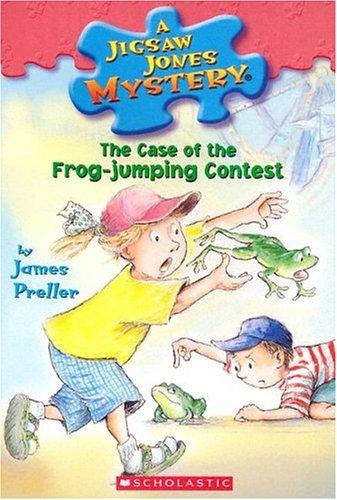
A parent should reach for this book when their child is ready for their first 'whodunit' but isn't ready for anything truly scary. This book is an excellent bridge to chapter books for young readers who love puzzles and logic. The story follows Jigsaw Jones, a second-grade private eye, and his best friend Mila as they work to solve a classroom mystery: a secret, coded message has gone missing. The book masterfully models teamwork, logical thinking, and the importance of communication in resolving misunderstandings. With short, manageable chapters and a focus on relatable schoolyard dynamics, 'The Case of the Missing Message' provides a gentle but engaging mystery. It builds reading confidence and shows children that problems can be solved by looking at the facts and working together. It’s a perfect choice for encouraging curiosity and perseverance in a fun, low-stakes environment.
Your experience helps other parents find the right book.
Sign in to write a reviewThe book deals with minor schoolyard conflict, such as false accusations and misunderstandings between friends. The approach is direct, secular, and entirely focused on problem-solving. The resolution is hopeful and reinforces the idea that communication can clear up most problems. There are no heavy or complex sensitive topics.
The ideal reader is a 6 to 8-year-old transitioning to chapter books. This child likely enjoys logic puzzles, playing 'I Spy', or trying to figure things out on their own. They are curious about social dynamics but need a safe, low-stakes story to explore concepts like friendship, fairness, and problem-solving.
No preparation is needed. The book can be read cold. Its vocabulary, themes, and plot are straightforward and perfectly suited for the target age range without requiring any parental context or pre-reading. A parent has noticed their child showing interest in mysteries, perhaps asking "who did it?" during a movie, but is concerned about finding something age-appropriate and not frightening. The child might be creating their own secret codes or is starting to navigate the social complexities of elementary school friendships.
A 6-year-old will be captivated by the process of solving the case, feeling like a real detective alongside Jigsaw. They will focus on the step-by-step clue gathering. An 8 or 9-year-old will likely solve the mystery quickly, but they will appreciate the character interactions, the humor, and the feeling of accomplishment, which helps build reading fluency and confidence.
Unlike many early-reader mysteries that can feel formulaic, the Jigsaw Jones series excels at integrating the mystery into a realistic school and friendship setting. The core conflict is not a crime but a misunderstanding. Its unique strength lies in modeling how logical deduction and clear communication are tools for solving everyday social problems, not just for catching criminals.
Second-grade detective Jigsaw Jones is hired by his best friend and business partner, Mila, to solve a personal case. A secret, coded note meant for her has disappeared. Their investigation leads them to question various classmates, including the class brain and a known troublemaker. By carefully gathering clues, deciphering the simple code, and using deductive reasoning, Jigsaw and Mila discover the note wasn't stolen but simply misplaced and misunderstood, leading to a friendly and satisfying resolution.
This overview was generated by AI based on the book's content and reviews, and may not capture every nuance.