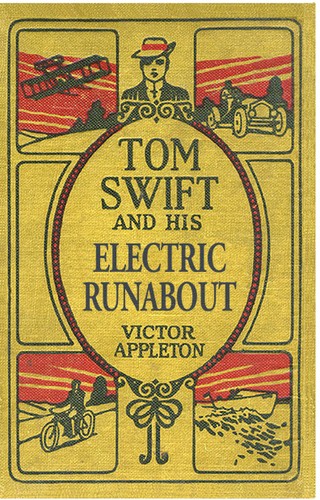
For young readers fascinated by invention and daring journeys, this classic tale follows a brilliant inventor and his latest creation on an exciting expedition.
A parent might reach for this book when their curious, invention-loving child is ready to engage with classic literature as a historical artifact. Published in 1911, this story follows young inventor Tom Swift as he travels to Africa to test his new electric rifle and hunt for ivory. While it captures the early 20th century's spirit of innovation and adventure, it is also a product of its time. The book contains outdated and offensive racial stereotypes and a colonialist perspective on exploration that require careful discussion. It is best suited for older readers (11+) who can, with guidance, analyze the story critically and understand how societal values have evolved.
The book's colonialist worldview and attitudes toward wildlife and other cultures are extremely dated.
Sensitive Topics
The book is built on a foundation of early 20th-century racism and colonialism. The portrayal of African people is deeply offensive and stereotypical, using terms like "savage" and depicting them as barbaric obstacles to the white heroes' quest. The violence is direct: the central purpose of the trip is big-game hunting for profit, and the killing of elephants is portrayed as heroic. The resolution is the successful, triumphant return of the white adventurers with their prize.
Ideal Reader
An older middle-grade reader (11-14) with a strong interest in history or vintage science fiction, who is prepared to read the book as a historical document. This is for a child who can participate in a thoughtful, critical conversation about how cultural values and scientific ethics have changed.
Parent Prep
This book absolutely requires parental involvement. A parent must preview the book, especially the chapters set in Africa (roughly chapter X onwards), to understand the extent of the racist language and colonialist attitudes. It cannot be read cold. It must be framed as a product of its time, and a parent should be ready to have explicit conversations about racism, colonialism, and wildlife conservation. A parent discovers their child is interested in "classic" adventure stories, perhaps finding a grandparent's old copy. The parent wants to share a classic but is rightly concerned about the outdated content and needs a framework for discussion.
Age Experience
A younger child (9-10) is likely to absorb the adventure story at face value, potentially internalizing the harmful stereotypes without critique. An older child (12-14) is better equipped to deconstruct the narrative, analyze the author's biases, and understand the book as a historical artifact rather than a simple adventure story.
What Makes It Special
Its primary value is not as a story, but as a cultural artifact. Unlike modern adventure fiction, this book's uniqueness lies in its unfiltered window into the worldview of 1911 America: the supreme confidence in technology, the excitement of exploration, and the deeply ingrained, unexamined racism and colonialist entitlement of the period. It is a powerful tool for teaching media literacy.
Read plot summary
Young inventor Tom Swift develops a powerful electric rifle capable of shooting bolts of electricity. To secure a supply of ivory for another of his father's inventions, Tom joins an expedition to Africa led by a famous big-game hunter. In Africa, he uses his rifle to hunt elephants and defend his party from wild animals and a group of hostile people he calls "red pygmies," who are depicted as monstrous savages.
This overview was generated by AI based on the book's content and reviews, and may not capture every nuance.
Discussion Prompts
1
How are the African characters described in the book? How does this compare to how we should respectfully talk about people from different cultures today?
2
Tom's goal is to hunt elephants for their ivory. What are your thoughts on this goal? How have our views on protecting animals like elephants changed since 1911?
3
The electric rifle is a powerful invention. Tom uses it for hunting and fighting. What are some other ways a powerful invention like that could be used, for good or for bad?
4
This book was considered a fun adventure when it was written. Why do you think people's ideas of a 'fun adventure' might have changed over the last 100+ years?