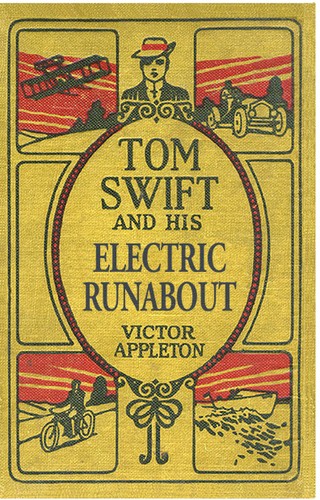
For young inventors and problem-solvers, this classic adventure follows Tom Swift as he tackles obstacles and races against rivals to perfect his wireless invention.
A parent might reach for this book to inspire a child who loves to build, tinker, and understand how things work, especially if that child has faced a setback with a project. Tom Swift and His Wireless Message is a classic adventure about a brilliant teenage inventor racing to perfect his long-range wireless telegraph. He must overcome technical failures, a destructive lightning storm, and ruthless rivals trying to steal his secrets. The story champions curiosity, perseverance in the face of failure, and the confidence that comes from mastering a challenge. Published in 1911, it provides a fascinating historical glimpse into the dawn of a new technology, making it a great choice for young readers interested in STEM, invention, and history.
Characters face sabotage, a lightning strike, and a shipwreck, but are never in mortal danger.
Cultural Content GapModerate
The book's social norms, language, and views on technology reflect its 1911 origin.
Sensitive Topics
The book's most significant sensitive topic is its use of racist stereotypes, common for its 1911 publication date. The character of Eradicate Sampson, an older Black man who works for the Swifts, is a harmful caricature depicted with an exaggerated, offensive dialect and a comic-relief, subservient role. This is a direct, not metaphorical, representation and requires significant contextualization. The book's overall resolution is hopeful and triumphant in its plot, but the social elements are deeply dated.
Ideal Reader
The ideal reader is a 10 to 13-year-old who is fascinated by mechanics, engineering, or early technology. This child enjoys straightforward adventure stories with clear heroes and villains and is motivated by plots that hinge on intellectual problem-solving rather than physical conflict or complex relationships. They are likely a builder, a tinkerer, or a fan of science-fiction that feels plausible.
Parent Prep
Parents must preview this book and be prepared to have a direct conversation about the racist portrayal of the character Eradicate Sampson. This is not a book to be read cold. Parents should explain the historical context of the Jim Crow era in which it was written, why the depiction is wrong and hurtful, and how representations in literature have (and still need to) change. It's a critical teaching moment embedded in an otherwise classic adventure tale. A parent has a child who just expressed frustration after a science project or a complex LEGO build failed. The parent is looking for a story that models resilience, iterative problem-solving, and the idea that failure is a part of the process of invention. They want to encourage their child's passion for STEM.
Age Experience
A younger reader (9-10) will likely focus on the adventure plot: the 'spies,' the storm, the race against time, and Tom's cool inventions. They may not fully grasp the offensive nature of the stereotypes without guidance. An older reader (12-14) can better analyze the historical context, appreciate the ingenuity of the technology for its time, and engage in a more nuanced discussion about the book's social flaws. They might also pick up on the themes of patent law and corporate espionage.
What Makes It Special
Unlike modern STEM fiction that often focuses on coding or robotics, this book is a time capsule of the analog age of invention. Its uniqueness lies in its earnest, early 20th-century optimism and its focus on foundational technologies like radio waves and electricity. It provides a direct link to the history of science and engineering, differentiating it from contemporary stories by grounding its 'science fiction' in what was, at the time, cutting-edge reality.
Read plot summary
Teenage inventor Tom Swift is on the verge of perfecting a powerful wireless telegraphy device in his home workshop. His project is beset by problems, including a devastating lightning strike that destroys his main transmission tower. At the same time, a rival corporation, the Seeley-Jones Company, uses espionage and sabotage to try to steal his plans. With financial backing from the eccentric Mr. Damon and help from his father and friends, Tom must rebuild his apparatus, outsmart his corporate enemies, and prove his invention works in a high-stakes, long-distance test.
This overview was generated by AI based on the book's content and reviews, and may not capture every nuance.
Discussion Prompts
1
When lightning destroys his tower, Tom's first reaction is despair, but he quickly decides to rebuild. What do you think motivated him to keep going? What helps you persevere when a project goes wrong?
2
The rival company tries to steal Tom's ideas instead of inventing something themselves. Why is it important to respect other people's creative work? What is the difference between being inspired by someone and copying them?
3
Mr. Damon is a key character who supports Tom with encouragement and money. How did teamwork and support from friends and family help Tom succeed in a way he couldn't have alone?
4
This story was written when wireless messages were brand new. What technology today feels just as new and exciting as Tom's wireless machine did over 100 years ago?