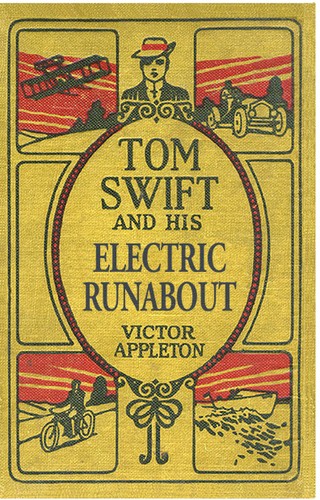
For the child who loves the thrill of invention and the excitement of a high-stakes adventure, this classic tale celebrates ingenuity and perseverance.
A parent might reach for this book when their curious, project-driven child faces a setback or unfair competition and needs a classic story of perseverance. 'Tom Swift and His Motor-Boat' is a turn-of-the-century adventure celebrating a young, brilliant inventor who designs and builds a revolutionary speedboat. The story follows Tom as he overcomes technical challenges and thwarts the schemes of jealous rivals, culminating in a thrilling race and a treasure hunt. It champions resilience, ingenuity, and integrity. While perfect for young readers who love machines and adventure, parents should be aware that the 1910 text contains dated language and stereotypes that require discussion, making it a valuable, if guided, reading experience.
The book's language, social attitudes, and gender roles reflect the values of the early 20th century.
Mild PerilMild
Characters face danger from bullies, a boat race, and a storm at sea. The peril is not graphic.
Sensitive Topics
The most significant sensitive topic is the book's reflection of early 20th-century racial attitudes. The portrayal of the African American handyman, Eradicate "Rad" Sampson, is a broad, minstrel-like stereotype, presented in dialect. This is a direct, not metaphorical, representation of period racism. The approach is secular, and the resolution of the plot is unambiguously triumphant and hopeful for the protagonist.
Ideal Reader
The ideal reader is a 9 to 12-year-old who is fascinated with mechanics, engineering, and problem-solving. This child likely loves building with LEGOs or models and enjoys straightforward action stories with clear heroes and villains. They should have the patience for slightly dated language and technical descriptions.
Parent Prep
This book cannot be read cold. A parent must preview and be prepared to have a direct conversation about the stereotypical portrayal of the character Eradicate Sampson. This requires providing historical context about when the book was written and explaining why such depictions are harmful and unacceptable today. Pages featuring this character's dialogue and actions are key points for discussion. A parent has a child who is passionate about a project, like a science fair entry or a personal invention, but is becoming discouraged by setbacks or the unfair actions of a peer. The child might say, "It's not fair, they keep trying to ruin my work!" or "I'll never get this right."
Age Experience
A younger reader (9-10) will likely focus on the adventure: the cool boat, the exciting race, and the good-versus-evil plot. An older reader (12-14) may appreciate the technical details more and will be more likely to notice and question the dated social attitudes and language, making the parental prep and discussion even more critical for them.
What Makes It Special
Unlike modern STEM fiction that often focuses on collaborative teamwork and nuanced ethics, this book is a prime example of the early 20th-century "boy inventor" genre. Its differentiator is its celebration of rugged individualism and Yankee ingenuity. It serves as a historical artifact, showcasing a brand of straightforward, optimistic, and action-oriented storytelling that has influenced adventure fiction for over a century.
Read plot summary
Boy genius Tom Swift, following in his inventor father's footsteps, designs and builds a revolutionary, high-speed motor-boat powered by a new electric engine. Throughout the process, he is harassed by a rival group of boys led by the wealthy and unscrupulous Andy Foger, who attempt to sabotage his work and steal his designs. The story climaxes with a dramatic boat race against his rivals, a dangerous storm, and a subsequent adventure to an island to recover a lost treasure, all of which serve to prove the superiority of Tom's invention and character.
This overview was generated by AI based on the book's content and reviews, and may not capture every nuance.
Discussion Prompts
1
Andy Foger and his friends try to sabotage Tom's boat many times. Why do you think they are so determined to see him fail? What are some better ways they could have handled their jealousy?
2
This book was written over 100 years ago. The character Eradicate Sampson is described in a stereotypical way that we would consider harmful today. Why is it important to recognize and talk about these portrayals in old books?
3
Tom faces many technical problems while building his motor-boat, but he never gives up. What personal qualities help him persevere? Think about a time a project was harder than you expected.
4
Tom's friend, Mr. Damon, offers constant encouragement, even when things go wrong. How does having a supportive friend help Tom achieve his goals?