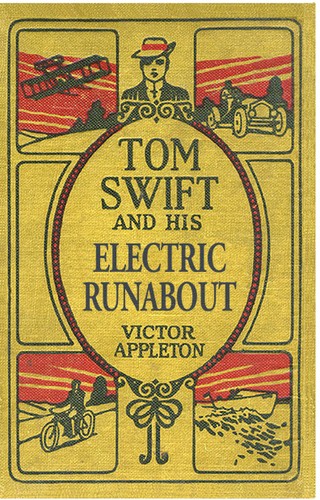
A parent might reach for this book when their child is captivated by how things work, loves classic adventure, and is ready for a story that celebrates ingenuity. This novel follows Tom Swift, a brilliant young inventor, as he designs and builds a cutting-edge submarine to search for a sunken treasure ship. It is a tale packed with the thrill of discovery, the satisfaction of creative problem-solving, and the importance of perseverance against both natural dangers and human rivals. Written in 1920, it's a wonderful gateway to classic science fiction for readers 9-14, celebrating a can-do spirit, though it may require parental context for its dated social perspectives.
Written in 1920, the book reflects dated social attitudes, language, and gender roles.
Sensitive Topics
This book is a product of 1920, and its primary sensitive issue is its cultural gap. The approach to gender is dated, with female characters being virtually non-existent. There are also stereotypical and simplistic portrayals of certain characters, reflecting the social norms of the era. The book's resolution is a straightforward and hopeful victory of ingenuity and morality over greed.
Ideal Reader
A 10 to 13-year-old who is fascinated by engineering, mechanics, and problem-solving. This reader likely enjoys building with LEGOs or models, is interested in vehicles (especially submarines), and prefers straightforward, plot-driven adventure stories with clear heroes and villains over complex character dramas.
Parent Prep
Parents should be prepared to discuss the historical context of the book. The language, social attitudes, and depiction of technology are from a century ago. A conversation about how adventure stories and our understanding of the world have changed can be very valuable. No specific scene requires a major warning, but the overall tone is of its time. The parent hears their child say, "I wish I could build a robot to do my chores," or sees them completely absorbed in taking apart an old appliance to see how it works. The child has a strong interest in technology and wants an exciting adventure story.
Age Experience
A younger reader (9-10) will be captivated by the cool submarine, the treasure hunt, and the direct conflict. An older reader (12-14) may still enjoy the adventure but will be more likely to notice the simplistic characters, the dated science, and the old-fashioned social norms, which can be a good starting point for discussion.
What Makes It Special
Unlike modern science fiction that often explores complex social or dystopian themes, this book is a prime example of early 20th-century technological optimism. Its uniqueness lies in its celebration of invention and American ingenuity as the solution to any problem. It is a foundational text in the "young inventor" genre and serves as a fascinating historical snapshot.
Read plot summary
Young inventor Tom Swift learns of a sunken steamship containing a valuable treasure of gold bullion. To recover it, he designs and builds a sophisticated new submarine, the Advance. With his friends, he embarks on an undersea expedition, facing numerous perils including technical malfunctions, the intense pressure of the deep sea, and dangerous marine life. Their greatest challenge comes from a group of ruthless rivals who attempt to sabotage Tom's efforts and claim the treasure for themselves through violent means.
This overview was generated by AI based on the book's content and reviews, and may not capture every nuance.
Discussion Prompts
1
Tom's submarine was futuristic for 1920. Which of its features are real on submarines today, and which parts still seem like science fiction?
2
When Tom's rivals tried to sabotage his submarine, he had to think quickly to save himself and his friends. What do you think is Tom's greatest strength: his inventions or his ability to stay calm under pressure?
3
The story treats invention as the solution to almost any problem. Can you think of a problem in the book or in real life that technology alone cannot solve?
4
If you could invent a machine to explore anywhere in the world, what would it be and where would you go first?