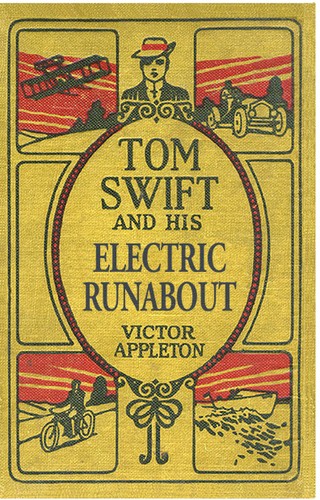
For children curious about invention and discovery, this book invites them to imagine the thrill of creating new technologies and embarking on daring adventures.
A parent might reach for this book when their curious child is fascinated by invention and loves stories about adventure and problem-solving. "Tom Swift and His Wizard Camera" is a classic early 20th-century tale about a brilliant young inventor who creates a revolutionary camera that can take pictures in color and through solid objects. He and his friends then embark on an exciting adventure to Africa to photograph wildlife, all while fending off rivals who want to steal his creation for their own greedy purposes. The story champions themes of ingenuity, perseverance, and bravery. For readers aged 9-12, it's a window into the optimistic, can-do spirit of a bygone era, but parents should be prepared to discuss its dated social attitudes.
Reflects outdated colonialist attitudes and social norms of the early 20th century.
ViolenceMild
Includes brief fistfights and the threat of danger from villains, but lacks graphic detail.
Mild PerilMild
Characters face dangers from wild animals and rivals during their expedition.
Sensitive Topics
The book was published in 1912 and contains significant, though period-typical, racist content. African characters are depicted through harmful stereotypes, spoken of in condescending terms, and treated as simplistic and inferior. This is a major cultural content gap that requires parental context. The approach is secular. The resolution is hopeful for the protagonists, who succeed in their goals.
Ideal Reader
A 10-12 year old with a strong interest in engineering, tinkering, and how things work. This reader loves straightforward adventure stories where the hero is smart and capable. They are likely an independent reader ready for classic literature but will need guidance to process the outdated and problematic social elements.
Parent Prep
This book cannot be read cold. Parents must preview the book and be prepared to have a direct conversation about the racist stereotypes used to describe the African characters. This should be framed as a "teachable moment" about how attitudes and depictions in literature have changed, and why the originals are hurtful and wrong. The scientific concepts are also fantastical and dated, which can be another point of discussion. The parent sees their child taking apart electronics to see how they work, building complex LEGO creations, or saying, "I want to be an inventor when I grow up." The child is asking for stories about science and adventure.
Age Experience
A 9-year-old will primarily enjoy the cool gadgets, the clear-cut heroes and villains, and the excitement of the adventure. An 11 or 12-year-old is more likely to notice the stilted language and may be better equipped to engage in a nuanced conversation about the book's historical context and its problematic representations.
What Makes It Special
Unlike modern STEM fiction that often focuses on collaboration, ethics, and diverse teams, this book is a prime example of the early 20th-century "lone boy genius" archetype. Its key differentiator is its value as a historical artifact, offering a clear view into the technological optimism and the social prejudices of its time. It serves as a foundational text for the entire genre of YA sci-fi adventure.
Read plot summary
Boy inventor Tom Swift creates a groundbreaking camera with multiple functions: it takes pictures in full color, can take flash pictures in darkness, and has a special lens that can see through opaque objects. Accompanied by his friends, he takes his invention on an expedition to Africa to photograph big game. They are followed by a rival group of men who want to steal the camera and use it to find a hidden treasure. The plot revolves around adventure, mild peril in the wilderness, and Tom using his wits and inventions to thwart the villains.
This overview was generated by AI based on the book's content and reviews, and may not capture every nuance.
Discussion Prompts
1
If you could invent a 'wizard camera' like Tom's, what special ability would you give it, and what would you use it for?
2
The story describes the people Tom meets in Africa in a way we would consider stereotypical and unfair today. What differences did you notice, and why is it important that stories have changed since 1912?
3
The villains try to steal Tom’s invention instead of creating their own. What does the book suggest is the difference between true invention and simply taking someone else's idea?
4
Tom, Ned, and Mr. Damon all have different skills. How does their teamwork help them succeed on their adventure in ways Tom could not have managed alone?